Marketing Agency Lead Generation: 9 Strategies That Actually Work in 2026
9 marketing agency lead generation strategies that actually build pipeline in 2026, ranked by ROI and effort, each with the tactical steps to run it.
By Josiah Jirgens, Technical Director of ComKey Consulting
Every marketing agency owner has read the same "marketing agency lead generation" article a hundred times. Post on LinkedIn. Ask for referrals. Run ads. Start a podcast. Generic enough to be right, useless enough to not move the needle.
This is a different article, updated for 2026. It ranks 9 strategies that actually generate agency pipeline this year, by real ROI per hour rather than by what sounds good on a blog. Some of these will feel uncomfortable because they require operational discipline most agencies skip. The ones that work do so because most agencies skip them.
This is the deep version: 9 tactics, with the execution steps for each. If you want the short, skimmable answer instead, see marketing agency lead generation strategies for 2026. For the wider picture (channels, sequencing, how it all fits) start at the agency lead generation hub.
The real problem
The lead-gen problem for digital agencies isn't "we don't know tactics." Everyone knows the tactics. The problem is that 90% of agencies run 2 or 3 of them half-heartedly instead of running 1 or 2 of them seriously.
If you take one thing from this guide: pick one or two tactics and run them deeply for 90 days before evaluating. Most agency lead-gen disappointment is ten things done badly, not two things done well.
Lead generation strategies for marketing agencies in 2026
Here's the whole playbook in one screen, ranked by ROI per hour for a typical marketing agency this year:
- Embed a free audit tool on your site. Replace the contact form with a useful report. It converts 3–5x better, and an AI-visibility audit is the standout 2026 variant.
- Niche-specific comparison content. Rank for "best [service] agency for [vertical]" instead of generic terms.
- An engineered referral flywheel. A scheduled ask, a forwardable intro, a real incentive, CRM tracking.
- Targeted outbound. A 200–500-account list, real research, value-first openers. Not mail-merge spray.
- Paid search on agency-intent terms. High CPC, high intent. Only with tight targeting and a matched landing page.
- Vertical case study pages. One per industry and outcome, each with a clear result and a CTA.
- Partnerships with complementary agencies. Give referrals first. Build a persistent, low-cost lead source.
- Free micro-tools beyond the audit widget. Practitioner-grade utilities that earn trust and traffic.
- Podcast appearances on client-adjacent shows. Be a guest where your prospects listen, not where other agencies do.
The rest of this guide is the detailed version of each, with the execution steps. The short, link-friendly summary of the same ideas lives at marketing agency lead generation strategies for 2026.
The 9 tactics, ranked
1. Embed a free audit tool on your agency site
Effort: Low (one-time setup). ROI: Highest of any tactic on this list. Time to first lead: 1–7 days after publishing.
Your agency site's homepage currently has a contact form. Visitors who are curious but not yet ready to book a call leave without becoming leads. A free audit tool replaces that contact form with something worth their email: they enter a domain, get a useful report, and you get a verified lead.
The audit can be anything. Technical SEO, site speed, AI visibility, content quality. The format matters less than the fact that it exists and delivers something useful. Conversion rate typically runs 3–5x what a "contact us" form does on the same traffic.
For agencies specifically, the AI-visibility audit is currently the most interesting version of this play. It's what prospects are asking about in 2026, and almost no competitor sites offer it.
Try ConvertHook on your own domain
See exactly how a brand appears in ChatGPT & AI search. Free audit, no credit card.
How to execute:
- Pick an audit tool that puts your logo on the report and the verification email (see our audit-tool guide).
- Add it to your homepage, prominently, above the fold.
- Set up email automation to follow up within 24 hours of submission.
- Embed your booking calendar inside the report itself, so prospects can book a strategy call the moment they see their competitive gap. The best tools (ConvertHook is designed around this) treat the report as the conversion surface, not just a thank-you page.
Agencies that skip step 4 leave 30–50% of the potential conversion on the table. The report is the peak-intent moment; sending people to a contact form afterwards loses them.
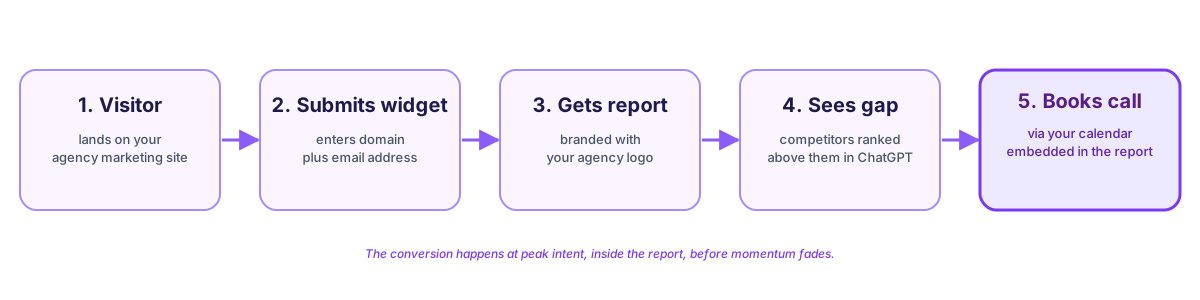
For the wider tooling picture (audit widgets, SEO platforms, reporting dashboards, and how they fit together) see the white-label tools for agencies hub. And if you want to run this tactic before you finish reading, drop your own domain into the free AI-visibility checker and look at the report a prospect would receive. It takes about a minute, and it's the fastest way to know whether the widget play fits your site.
2. Niche-specific comparison content
Effort: Medium (content production). ROI: High and compounding. Time to first lead: 3–6 months.
Rank for queries like "best SEO agency for SaaS," "top PPC agencies for ecommerce," or "marketing agencies for medical practices." These queries have lower volume than generic "SEO agency" terms but much higher intent. The searcher is specifically looking for a specialist.
How to execute:
- Pick one vertical where you have a couple of wins to show.
- Write a genuinely useful comparison or listicle targeting that vertical's searchers.
- Include your own agency in the listicle honestly (not at #1).
- Build 2–3 case study pages for the same vertical.
- Internal-link aggressively between them.
Most agencies try to rank for "SEO agency" generically and fail. Agencies that pick one narrow vertical and dominate it win.
3. The referral flywheel, systematic rather than casual
Effort: Medium (systems setup). ROI: Very high for mature agencies, low for new ones. Time to first lead: Variable.
Every agency "does referrals." Almost none engineer them as a system. The difference is dramatic.
The systematic version:
- Every 90 days, email your past 20 happiest clients with a specific ask: "Who in your network is asking about X?" (not "know anyone who needs marketing?").
- Make the referral easy. Send a pre-written introduction email they can forward.
- Offer something genuine to the referrer. A percentage of first 3 months, equivalent credit, or charity donation, depending on your client type.
- Track referral source in your CRM.
- Report referral revenue to the team monthly so the motion stays prioritised.
The gap between "we take referrals" and "we systematically ask for referrals" is the difference between 5% and 30% of your pipeline.
4. LinkedIn outbound, specific rather than spray
Effort: High (ongoing). ROI: Medium-high if niched, low if generic. Time to first lead: 2–6 weeks.
Generic LinkedIn DMs are dead. Specific, relevant ones still work. But the bar has moved up sharply.
What still works in 2026:
- Narrow target list (200–500 ICPs maximum, not 10,000).
- Personalised first line from actual research (their recent post, company news, shared connection).
- Lead with value, not pitch. A free audit report, a specific insight about their website, a useful comparison.
- No follow-up sequence for 10+ messages. Two follow-ups maximum.
What's dead:
- "I help agencies like yours" openers.
- "Just checking if you saw my last message" follow-ups.
- Automated sequences with mail-merge names.
5. Paid ads on agency-intent search terms
Effort: Medium (setup and ongoing). ROI: Medium if targeted correctly, poor if not. Time to first lead: Days (for the cold lead), months (for the closed deal).
Google Ads on "white label SEO tool," "AI SEO agency," "marketing agency for [niche]," and similar. These terms have CPCs of $20–$60 but the intent is high. The searcher is shopping.
Tight targeting is everything:
- Agency-intent keywords only (not "what is SEO").
- Geo-fence if you serve regionally.
- Negative-keyword everything related to learning or DIY ("how to," "tutorial," "course").
- Landing page must match the ad. Don't send white-label-tool searchers to your generic homepage.
6. Case study pages for specific verticals
Effort: Low to medium per page. ROI: High over time (SEO and trust). Time to first lead: 2–6 months.
A case study page does two jobs: it ranks for "[client name] SEO case study" queries, and it converts visitors already on your site. Most agencies have one generic case study page. Top agencies have 20, each for a specific industry and outcome.
Each case study should have:
- Clear outcome in the headline ("3x organic traffic in 7 months for a B2B SaaS").
- The starting problem specifically described.
- What you did (not vague "we ran SEO" but actual tactics).
- The data.
- A client quote (real, attributed).
- A CTA to a free audit or strategy call.
7. Partner with complementary agencies
Effort: Low to medium (relationship building). ROI: High when it works. Time to first lead: 1–3 months from first conversation.
The other agencies in your space aren't all competitors. PPC agencies need SEO help for clients. SEO agencies need PPC help. Content agencies need technical partners. Web-dev shops need marketing partners.
How to execute:
- Make a list of 20 agencies in adjacent (non-competing) services.
- Reach out offering to send them referrals first, not asking for them.
- Be specific about what kind of client you'd refer (size, industry, stage).
- Keep the agreement simple. No formal contract, just consistent introductions.
The agencies that do this consistently build a persistent lead source that outperforms most paid channels.
8. Free micro-tools (beyond the audit widget)
Effort: Medium to high (build cost). ROI: High over time, delayed. Time to first lead: 3–12 months.
Beyond an embedded audit, small free tools on your site (SERP preview generators, schema validators, redirect mapping tools, meta-description checkers) attract high-quality traffic from practitioners (in-house marketers) who become leads or referrers.
Why this works: practitioners who use your free tool trust your expertise in that narrow area. When they or their company need an agency for that work, you're the first call.
9. Podcast appearances (client-adjacent, not marketing)
Effort: Medium. ROI: Medium. Compounds slowly. Time to first lead: 6–12 months.
Being on podcasts is still underrated. Being on client-adjacent podcasts (shows your prospects listen to, not other marketing podcasts) is especially high-ROI.
The move:
- List 10 podcasts your ideal client listens to (not what other agencies listen to).
- Pitch specific episode topics that help their audience, not your credentials.
- Include a domain-specific CTA at the end ("mention this podcast for a free X").
Most agencies pitch themselves onto other marketing podcasts. Those audiences are other agencies, not prospects.
Prioritisation framework
If you're trying to decide where to focus, these tactics cluster into three groups by time-to-result.
| Time-to-lead | Tactics | Best for |
|---|---|---|
| Days to weeks | Audit widget (1), LinkedIn outbound (4), paid ads (5) | Agencies that need pipeline now |
| 2–6 months | Niche content (2), referral flywheel (3), case studies (6), partners (7) | Agencies with runway to invest in compounding channels |
| 6+ months | Free tools (8), podcasts (9) | Mature agencies building brand |
Most agencies should run:
- One tactic from the first group (fast pipeline to stay in business).
- One from the second group (building the compounding engine).
Running one from each is better than running three half-heartedly across all three groups.
The single biggest mistake
Running tactics instead of improving your offer. If your positioning is weak ("we do SEO, PPC, social, and content for anyone"), no lead-gen tactic will save you. You'll just have more unqualified conversations. Niche down first, then drive leads.
FAQ
Frequently asked questions
- Should an agency run all 9 of these tactics?
No. Running all nine half-heartedly is the mistake this guide is built to prevent. Pick one fast tactic (the audit widget, targeted outbound, or paid ads) so you have pipeline this quarter, plus one compounding tactic (niche content, the referral flywheel, partnerships, or free tools) so you have pipeline next year. Run those two seriously for 90 days before you add or change anything.
- Which of these tactics is the lowest effort to set up?
The audit widget (Tactic 1). It's a one-time install on your homepage, no ongoing content production, and an AI-visibility tool generates the report for you. That's why it sits at the top of the list: lowest effort, fastest payback, highest ceiling. Everything else on the list requires sustained work.
- How long before the audit-widget tactic produces leads?
Usually 1 to 7 days after you publish it, assuming you already have some traffic to the page it's on. Unlike content (months to rank) or partnerships (weeks to months to build), the widget converts existing visitors immediately. The follow-up email and the sales call are what turn those leads into booked work, so set those up at the same time.
- How is this guide different from the '2026 strategies' page?
This one is the deep version: 9 tactics with the execution steps for each. The marketing agency lead generation strategies for 2026 page is the short, skimmable answer to "what should we do this year," written to be quoted quickly. Read this when you're ready to execute; read that when you want the summary.
Related reading
- Marketing agency lead generation strategies for 2026: the concise companion to this deep guide.
- Agency lead generation hub: all the channels, how to sequence them, and where this guide fits.
- The best white-label SEO audit tools for agencies: the tool side of Tactic 1.
- White-label tools for agencies: the broader tooling picture across audit, delivery, and reporting.
- How to offer AI-visibility audits as an agency service: turning the audit widget into a retainer service.
If you want to test the audit-widget tactic fastest, run your own domain through the free AI-visibility checker and see the output. It takes about a minute and shows you exactly what your prospects would get.
More in Lead generation
- What converts better than a form on an agency website?
An interactive audit widget converts agency traffic at a multiple of a static form, because the visitor gets a useful, branded result on the spot. Here's why, and when a form still works.
- How can agencies qualify inbound leads automatically?
Replace the "tell us about your business" form with a domain-first capture that runs an audit on the prospect — you see fit before the call. Here's the mechanic.
- How do I let prospects book a call straight from an audit report?
Use an audit tool that embeds your booking calendar inside the report. Here's the mechanic, why it matters, and what most audit tools get wrong.